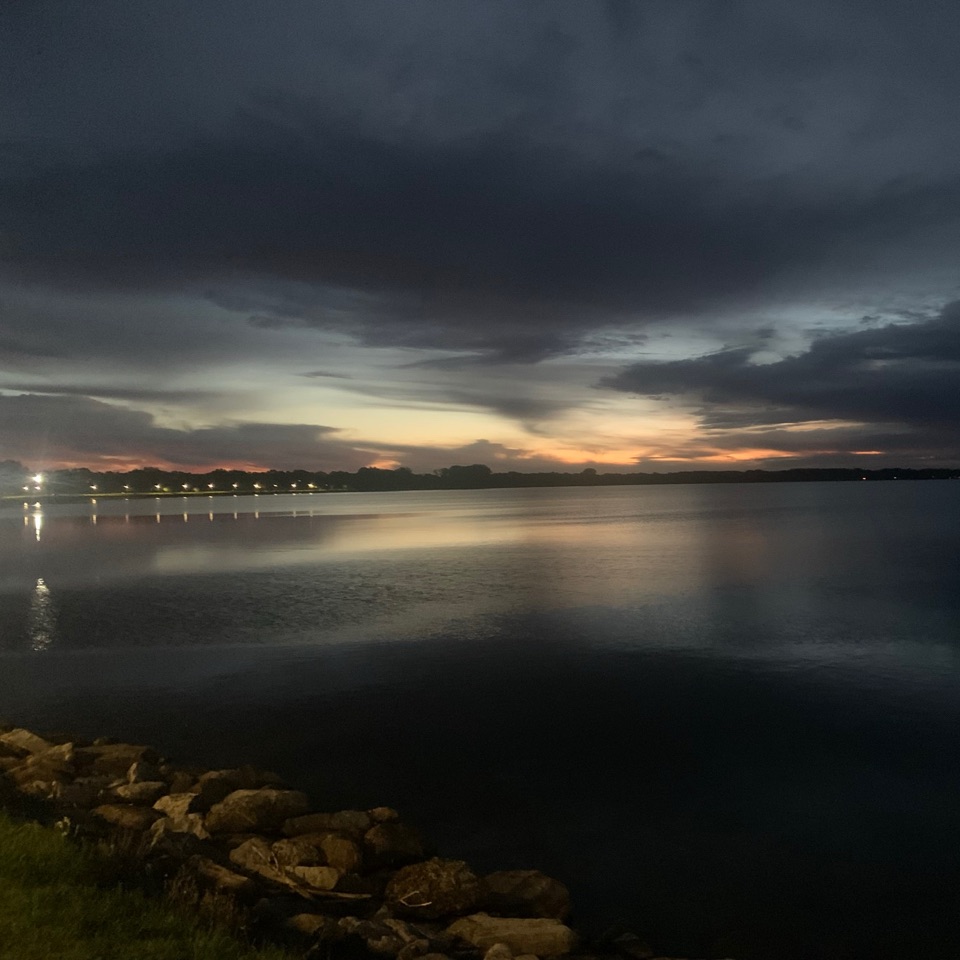
Some weeks the world shakes, and the church must not pretend otherwise. Missiles cross borders, leaders fall, nations answer violence with violence, and ordinary people—parents, children, soldiers, civilians—wake up to a world more fragile than the day before. Some hear the news and feel fear rise in their throats. Some feel anger. Some feel a familiar tightening in the chest, shaped by years of service and sacrifice. Some believe the response is necessary. Some pray it will not go further. And all of it—every bit of it—is wilderness.
And into a world like this, Scripture does not give us a God who waits for calmer days. It gives us a God who tears open the heavens. Jesus steps into the Jordan with the weight of a people longing for peace, longing for justice, longing for God to be near. The water closes over him, and when he rises, the sky itself cannot hold back. It rips open. A voice calls him Beloved—not because the world is safe, not because the future is clear, not because the path ahead will be gentle, but because belovedness is the only truth strong enough to carry him into what comes next. Belovedness is not spoken in spite of the wilderness. It is spoken for the wilderness.
And then, without even a breath between blessing and barrenness, the Spirit who descends like a dove drives him into the wilderness. Not because he failed. Not because he sinned. Not because God is testing him to see if the belovedness was a mistake. The wilderness is simply where belovedness goes next. Mark tells us Jesus was with the wild beasts, and the angels waited on him. The wilderness holds both danger and care. Both are real. Both belong to the truth of being human. And Jesus is not abandoned there. The Spirit who names him is the Spirit who stays with him. Presence does not evaporate when the scenery turns harsh. God’s love does not retreat when life becomes uncertain. Belovedness is not fragile.
And wilderness is not just ancient terrain. It is the world we are living in right now. In the last days, the United States and Israel launched a massive strike on Iran, killing the country’s supreme leader and hitting military and leadership targets across the region. Iran retaliated with missile strikes across the Gulf, and cities from Tehran to Dubai have felt the shock. Airspace has closed. Families are afraid. Leaders are speaking in urgent tones. The world is holding its breath. This is wilderness—real wilderness. The kind where people wake up to news alerts and feel their stomach drop. The kind where decisions made oceans away ripple into living rooms here.
Some leaders sow fear, and the supreme leader of Iran was one of them. His power wounded many. But when a man like that falls, the earth trembles—and the tremors do not stop at the feet of the guilty. They ripple outward into the lives of the innocent. Into the homes of families who did not choose this path. Into the hearts of children who only want to grow up in peace. And God’s grief is always greatest for those who never asked to be part of the story.
And the truth is: the feelings held among us—here and wherever this is heard—are not abstract. They come from lived experience—military service, family sacrifice, cultural memory, moral conviction, fear for loved ones, hope for stability, grief for every life at risk. These responses are not opposites; they are threads of the same human story. So we hold them gently. We do not shame those who see necessity. We do not dismiss those who see danger. We do not pretend that one reaction is more faithful than another. We simply say: this, too, is wilderness. And belovedness is here with us. Because wilderness is not where God sends us to be punished. It is where God stays with us while we wrestle, while we discern, while we carry what is heavy. It is where God holds us when we cannot hold each other perfectly.
And then Genesis steps in with its own story of storm and aftermath. A world washed by chaos, a family stepping out onto unfamiliar ground, and God hanging a bow in the clouds—not as a threat, but as a promise. A reminder aimed at God’s own heart: never again. Never again destruction. Never again abandonment. Never again a world left to fend for itself. This covenant is unconditional. No human behavior triggers it. No human failure cancels it. It is God’s decision to stay. When you hold that covenant beside Jesus in the wilderness, a pattern emerges: God’s posture toward creation is steadfast presence, not punishment. God’s love goes with us into every wilderness, not because we are strong, but because we are beloved.
And so we look at our own lives. The wilderness of grief that comes in waves. The wilderness of medical uncertainty that keeps you awake at night. The wilderness of relationships that have frayed or broken. The wilderness of caregiving that asks more of you than you feel you have. The wilderness of a congregation navigating change. The wilderness of a world that feels loud, violent, unmoored. These are not signs that God has stepped back. These are the places where belovedness becomes our bread. These are the landscapes where angels still find us, often disguised as neighbors, nurses, friends, church members, or the quiet strength that rises in us when we thought we had none left.
And yes—the wilderness of global conflict. The wilderness of watching nations strike and retaliate. The wilderness of knowing that real people—parents, children, soldiers, civilians—are caught in the middle. The wilderness of praying for peace while knowing how fragile peace can be. The wilderness of honoring those who have served without assuming they all think alike. The wilderness of refusing to dehumanize anyone—soldier or civilian, American or Iranian. The wilderness of trusting that the God who tore open the heavens to call Jesus Beloved has not stopped tearing open the heavens to stay close to us now.
Jesus comes out of the wilderness with a clarity that only love can give. He steps into Galilee proclaiming good news—not because the wilderness was easy or simple, but because he discovered again that belovedness does not break. And we discover it too. In our own wildernesses, we carry the same truth spoken over us: You are my beloved. Not because you have it all figured out. Not because you feel strong today. Not because you have earned God’s presence or God’s favor. But because God stays. The rainbow still stretches across the sky after storms. The Spirit still walks with us into the unknown and the hard places. The angels still come—sometimes in the faces of one another, sometimes in the quiet strength that rises when we thought we had none left. And belovedness still holds.
Amen.
 Sacred Truth, Human Mess
Leave a comment