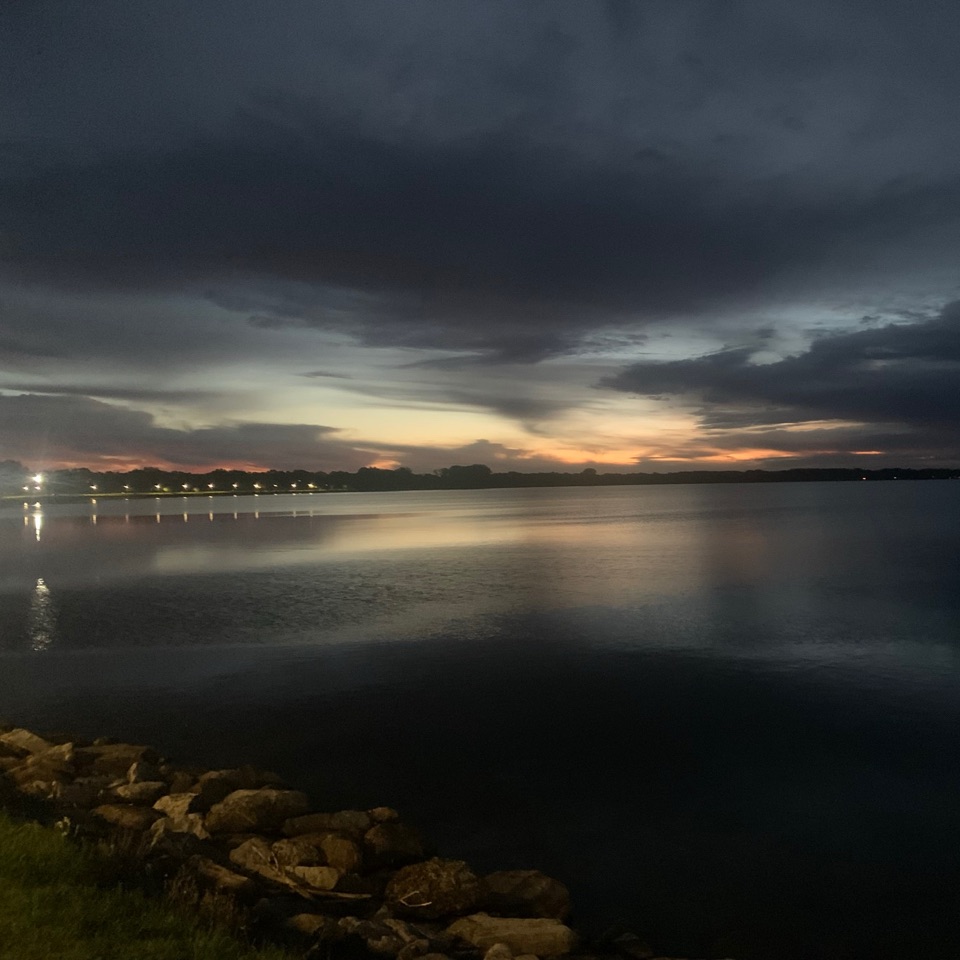
This morning we gather in a strange place on the calendar — January 4 — suspended between Christmas fading and Epiphany not yet arrived. We are living in the in‑between. And this year, that in‑between is crowded: eight different passages from scripture are speaking at once, pulling us toward two different lectionaries, two different liturgical identities, two different ways of seeing the world. Isaiah is rising, Jeremiah is gathering, the psalmists are singing, Ephesians is blessing, John is illuminating, and Matthew is guiding travelers by starlight — all of them converging here, in this moment, before the star officially rises on January 6. It is a holy, complicated, beautiful in‑between.
And maybe that’s exactly where Epiphany belongs — in the in‑between.
Because that’s where most of us live.
And it is certainly where the Christ child meets us — not in a world neatly arranged, but in a world trembling, uncertain, and unfinished.
We live between what we hoped for and what actually happened.
Between grief and healing.
Between exhaustion and renewal.
Between fear and courage.
Between the world as it is and the world as God longs for it to be.
And this year, we live between global upheaval and uncertain futures.
Between headlines that shake us and prayers that steady us.
Between the suffering of millions and the hope that refuses to die.
And into this in‑between moment comes the news of U.S. military action in Venezuela — the operation that resulted in Nicolás Maduro and his wife being taken into custody. For some, that news brings relief. For others, fear. For many, confusion. And for all of us, it raises questions about power, sovereignty, and the human cost of political decisions.
Whatever our interpretations of Maduro’s leadership — and, believe me, many have suffered under it — and whatever our feelings about the decision made by our government, we know this: military intervention always carries consequences for ordinary people. Families who have already endured years of hardship now face a new chapter of uncertainty.
And the suffering did not begin this week. According to the UN Refugee Agency, 7.9 million Venezuelans have left their country in the past decade — one of the largest displacement crises in the world. Seven point nine million stories of parents leaving home because they could no longer feed their children. Seven point nine million journeys across borders, deserts, rivers, and oceans. Seven point nine million lives uprooted by economic collapse, political repression, and the slow unraveling of a nation.
Seven point nine million — a number so large it’s hard to imagine, until we remember that every one of those 7.9 million is someone God calls by name. Someone with a story. Someone with a family. Someone who did not want to leave home.
And so when we hear news of U.S. military action, when we hear that Nicolás Maduro has been taken into custody, we hold two truths at once:
that many suffered under his leadership, and that military intervention brings its own kind of suffering. We do not celebrate violence, even when harmful leadership ends. We do not rejoice in force. We grieve the circumstances that make such actions seem inevitable. And we pray for the millions who have already been displaced — and for those who may now face new uncertainty.
But Epiphany is not only about what is happening “out there.” It is also about what is happening in us.
Because we, too, come into this sanctuary carrying our own in‑betweens.
Some of us are exhausted from caregiving.
Some are grieving losses we don’t know how to name.
Some are navigating medical diagnoses, strained relationships, or financial pressure.
Some are quietly celebrating new beginnings — a new job, a new relationship, a new sense of purpose.
Some are simply trying to make it through the week.
Some are holding joy and sorrow in the same breath.
Epiphany meets us in all of it.
And so does the Christ child — still vulnerable, still radiant, still unsettling the powers of the world simply by being here.
And into this world — this world of displacement, upheaval, and uncertainty, both global and personal — scripture speaks. Not in tidy order, but in a chorus.
Isaiah rises first
“Arise, shine, for your light has come.”
Isaiah speaks to a people emerging from darkness, a people who have forgotten what hope looks like. Isaiah knows the in‑between — between exile and homecoming, between despair and dawn. Isaiah dares to say that God’s glory rises not when everything is fixed, but while the world is still trembling.
And Christians dare to say that this rising light has a face — the face of the Christ child, small and luminous in a world still shaking.
Jeremiah joins him
“I will gather them… I will lead them back… their life shall become like a watered garden.”
Jeremiah knows what it means for a nation to unravel. He knows what it means for people to be scattered by forces beyond their control. And he knows what it means for individuals to feel scattered inside themselves — pulled apart by grief, by fear, by the sheer weight of living.
And into that scattering comes a child who will one day be called the Good Shepherd — the one who gathers, leads, and restores.
Matthew steps in with a story that feels eerily familiar
“In the time of King Herod…”
Which is another way of saying: in a time of fear, violence, and political volatility.
The magi arrive in that world — outsiders, foreigners, people with no political leverage — following a star they cannot explain. They travel not because the world is safe, but because something in them refuses to give up on the possibility of revelation.
They travel in the in‑between — between what they know and what they hope to find.
And what they find is not a throne, not a fortress, not a general — but a child.
A child who reveals God not through might, but through vulnerability.
And the holy family? As we heard last week, they will soon flee to Egypt. They will become refugees. They will live in the in‑between — between danger and safety, between homeland and foreign soil.
The Christ child will learn the taste of displacement before he learns to walk.
The psalmists join the chorus
Psalm 147 sings of a God who heals the brokenhearted and binds up wounds — a God who counts the stars and calls them by name.
Psalm 72 dreams of a ruler who delivers the needy, rescues the poor, and crushes oppression — a ruler who embodies justice, not domination.
Both psalms know the in‑between — between wound and healing, between winter and thaw, between injustice and the dream of a world made right.
And Christians dare to say that this dream takes flesh in the Christ child, whose very presence reorders what power means.
John’s Gospel breaks in with cosmic poetry
“The light shines in the darkness, and the darkness did not overcome it.”
John knows the in‑between — between darkness and dawn, between fear and revelation, between the world as it is and the world as God dreams it.
And John insists that this light is not abstract — it is embodied in the Word made flesh, the child who carries God’s radiance into the world’s shadows.
And Ephesians — both chapters — remind us who we are
Ephesians 1 says we are chosen for belonging, destined for grace, rooted in blessing.
Ephesians 3 says this grace is for all people — Gentiles and Jews, insiders and outsiders, the powerful and the powerless — a mystery revealed in Christ.
A mystery that begins not with a king on a throne, but with a child in a manger, drawing the whole world into God’s embrace.
—
When you let all these scriptures speak together — Isaiah’s rising light, Jeremiah’s gathering, the psalmists’ healing and justice, Ephesians’ belonging, John’s shining Word, Matthew’s star — a pattern emerges.
Not a pattern of certainty, but a pattern of revelation.
A revelation that begins with the Christ child.
God is revealed in the in‑between.
Not in stability, but in upheaval.
Not in power, but in vulnerability.
Not in the halls of empire, but in the fragile places where people are trying to survive.
Not in the perfect moment, but in the moment we actually have.
And yes — it is complex to preach two lectionaries at once.
It is complex to honor both Christmas and Epiphany.
It is complex to speak truth in a world that is shaking.
It is complex to hold scripture and headlines in the same hand.
It is complex to preach hope without denying pain.
It is complex to name injustice without becoming numb.
It is complex to stand in the in‑between and say, “God is here.”
But that is exactly what Epiphany asks of us.
And it is exactly what the Christ child teaches us — that God shows up in the fragile, the uncertain, the unfinished.
Epiphany asks us to see clearly — to refuse denial, to name suffering honestly.
Epiphany asks us to hold compassion wide enough to include people we will never meet.
Epiphany asks us to resist the temptation to retreat into cynicism or numbness.
Epiphany asks us to be bearers of light — not in grand gestures, but in the daily choices that shape our communities.
Epiphany asks us to trust that God is still being revealed, even in places where hope feels thin — including the places inside us.
Isaiah promises rising light.
Jeremiah promises gathering.
The psalms promise healing and justice.
Ephesians promises belonging.
John promises light.
Matthew promises a star that still rises, even in Herod’s world.
And Christmas promises a child — God with us in the most vulnerable form.
And Epiphany gathers all of it into one truth:
God is still showing up in the in‑between.
Not just in ancient stories, but in the resilience of communities rebuilding after upheaval, in the courage of those advocating for justice, in the quiet kindness exchanged between strangers, in the hope that refuses to die even when the world feels unbearably fragile. And yes — in our own lives, in our own struggles, in our own joys, in our own longing for meaning.
Today, as we hold the people of Venezuela in our hearts — and as we wrestle with the implications of our own nation’s actions — Epiphany invites us to pray not as an escape from responsibility but as a way of aligning ourselves with God’s vision for justice and peace. It invites us to stand in solidarity with those who suffer. It invites us to trust that the light still shines — not because the world is safe, but because God refuses to abandon it.
And so we leave this place ready to walk another road — one shaped by compassion, grounded in justice, illuminated by the God who still chooses to dwell among us, and carried by the light that is already rising in our own in‑between — the light first revealed in the Christ child.
Amen.
 Sacred Truth, Human Mess
Leave a comment